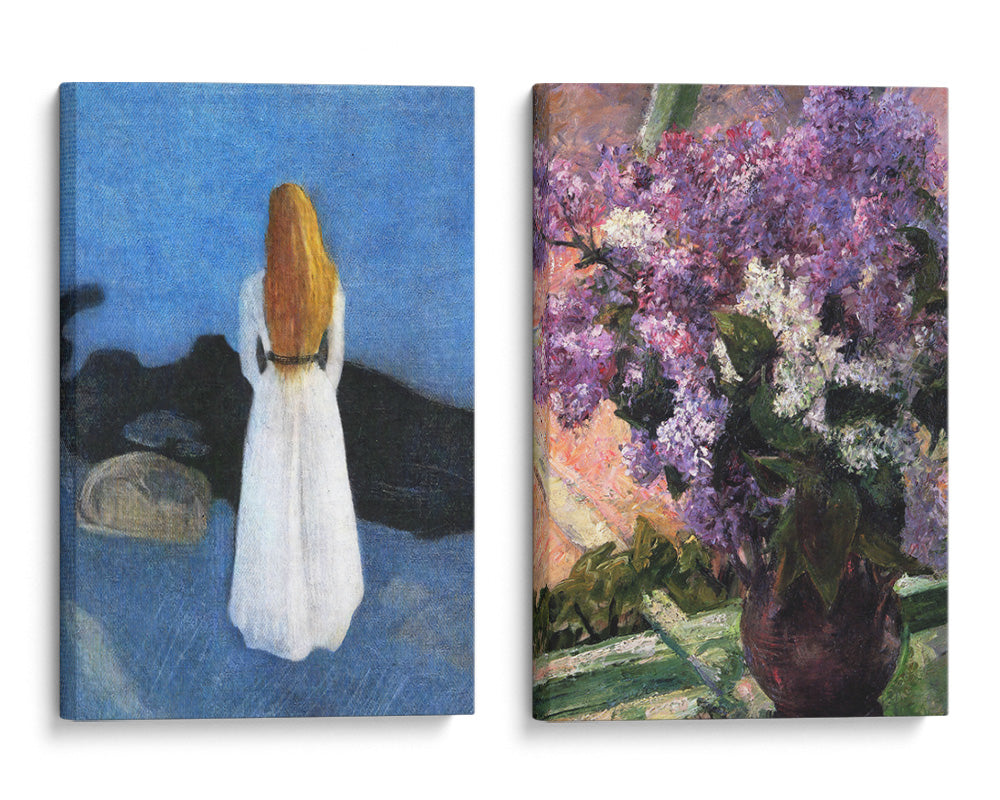
Edvard Munch's "Young Woman on the Shore": Exploring Loneliness, Isolation, and the Search for Solace
Feel the poignant solitude of Edvard Munch's "Young Woman on the Shore," painted in 1896. This haunting masterpiece, now meticulously reproduced on museum-quality canvas, invites you to delve into the depths of human emotion.
Munch's Expressionistic Style: Conveying Emotions Through Form and Color
In "Young Woman on the Shore," Munch's signature Expressionistic style is evident. The bold, sweeping brushstrokes and distorted figures create a sense of raw emotionality. The muted, earthy tones evoke a feeling of desolation and longing.
Symbolism and Meaning: The Isolation of the Human Condition
The solitary figure of the young woman, isolated on the bleak shoreline, symbolizes the profound loneliness and alienation of the human condition. Her hunched posture and downward gaze convey a sense of vulnerability and helplessness.
Artistic Context: Munch and the Symbolist Movement
"Young Woman on the Shore" is a powerful example of Munch's involvement in the Symbolist movement. Symbolists sought to express inner emotions and experiences through evocative imagery and symbolism.
Feelings Conveyed: Loneliness, Despair, and the Search for Meaning
Munch's painting captures the despair and isolation that can accompany the search for meaning and connection. The young woman's solitude is palpable, yet there is a glimmer of hope in her gaze, a suggestion that even in the face of loneliness, the human spirit yearns for connection.
Experience the Masterpiece in Your Own Space
This high-quality canvas print brings the emotional intensity of Munch's "Young Woman on the Shore" into your home. Its fade-resistant inks ensure that the painting's expressive power will endure for generations.
Let Edvard Munch's "Young Woman on the Shore" provoke contemplation, spark meaningful conversations, and remind you of the enduring power of art to reflect the complexities of human existence.